


During a visit to an art museum in Durango, Colorado this past summer, Ms. Mandy Hart, our 4th grade teacher, noticed something striking: instead of the usual labels and artist bios, each sculpture had a small QR code underneath. A quick scan opened a video of the artist explaining their inspiration, process, challenges, and favorite moments in creating the piece. It was a beautiful expression of ownership—artists speaking for themselves about their craft.
As Ms. Hart wandered the gallery, she found herself thinking about writing and the writing process for her own students. What if our own fourth graders could share their stories with that same sense of pride and voice? She was able to envision QR codes on the students’ final drafts and parents hearing their children talk about their ideas and creative choices. So this fall, Ms. Hart and Ms. Baese, her teaching colleague in 4th grade, worked to make that vision real.
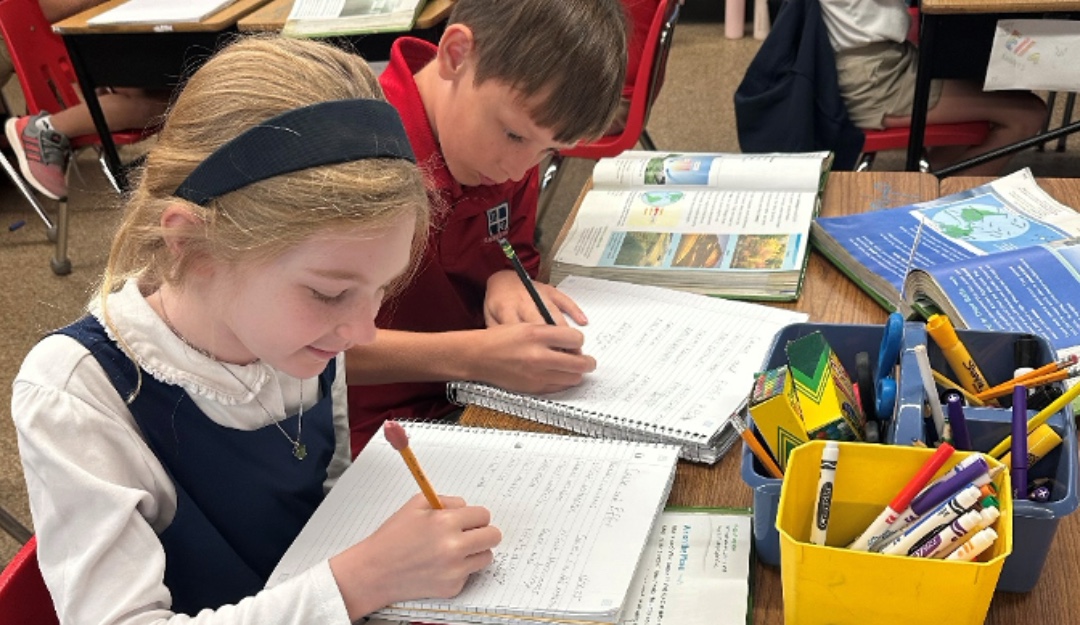
In late September, the 4th graders began their first extended writing project of the year: crafting original trickster tales while practicing each step of the writing process—brainstorming, drafting, editing, peer review, and final publication. To build background knowledge, students spent two weeks reading trickster tales from around the world, from China to South America. They analyzed story structure, sequence of events, and character traits, and then turned to their own planning: What animal would make a great trickster? What traits—cleverness, mischief, humor—might bring a character to life?
Students researched animals, sketched ideas, and built lists of possible character traits. Then came the rough draft—the phase many students ended up loving most. They were encouraged simply to write, without worrying about mistakes. This freedom opened space for confidence, creativity, and joyful experimentation. After drafting, students edited their work, exchanged stories for peer review, offered thoughtful feedback, and completed polished final versions. Each student also illustrated a scene from their story.
Before recording their QR-code reflections, students revisited the full arc of their work, identifying both challenges and highlights. Again and again, they named the rough draft stage as their favorite—proof of what can happen when young writers are given time, safety, and encouragement to explore their ideas.
Four weeks after beginning, our authors had not only finished their trickster tales, but also recorded short audio reflections as “expert writers” describing their process.
The stories are now displayed outside the fourth-grade classrooms. We invite you to stop by, scan the QR codes, and hear our young authors share their creativity, insight, and genuine love of writing.