



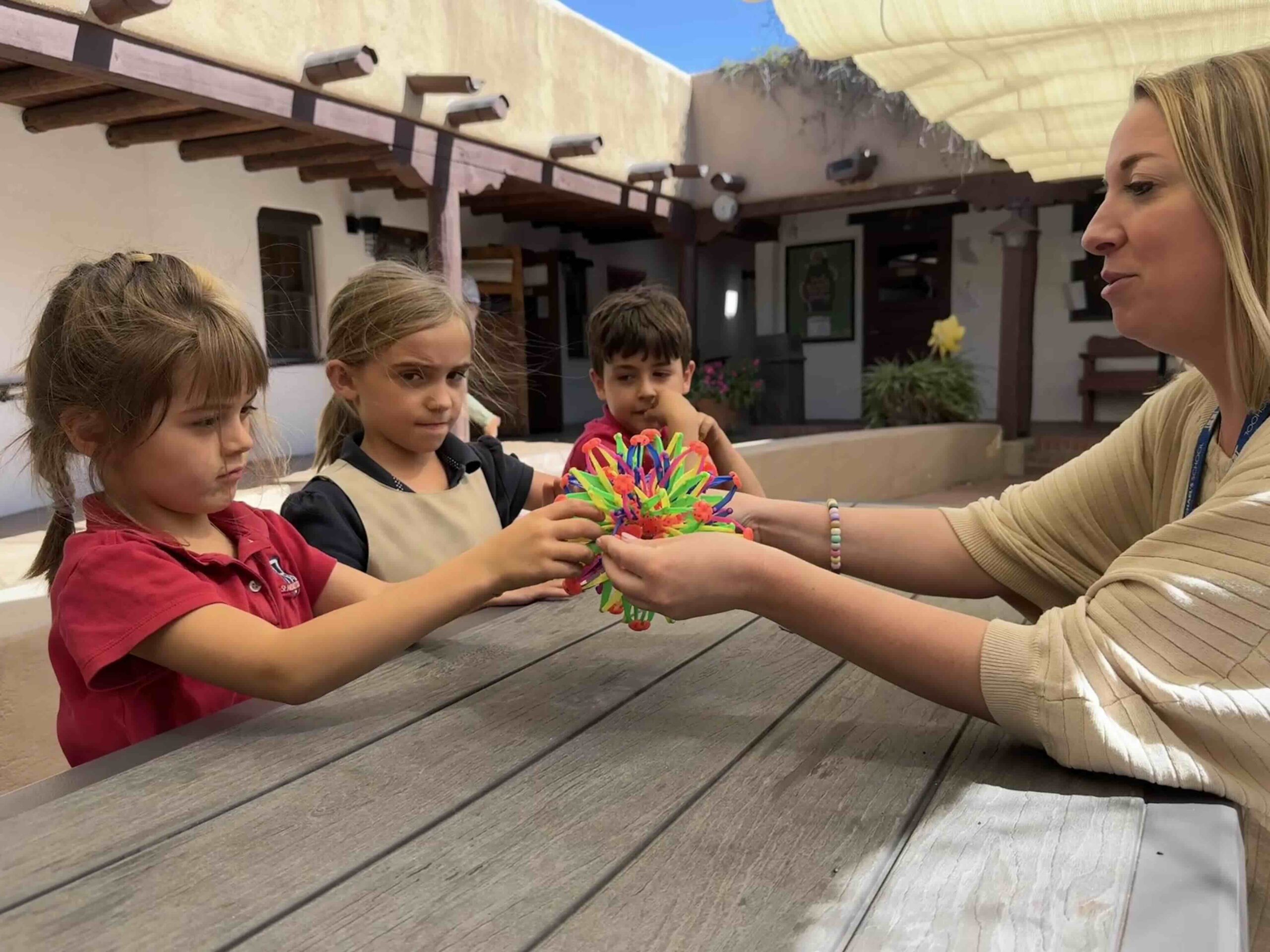
In today’s schools, academic excellence alone is no longer enough. Preparing students for a complex and ever-changing world requires something deeper: the ability to understand themselves, navigate relationships, and respond thoughtfully to challenges. This is the heart of Social-Emotional Learning (SEL) at St. Michael’s School, and it has become a defining strength of our school community.
At its core, SEL equips students with lifelong skills—self-awareness, emotional regulation, responsible decision-making, empathy, and perseverance. As School Counselor Courtney Croswell explains, “SEL helps students develop the skills they need to understand and manage emotions, make thoughtful decisions, build positive relationships, and demonstrate perseverance and leadership.” Just as importantly, she notes, strong SEL programming “fosters a caring school environment where students feel supported, connected, and valued within their community.”
From Emotions to Academics: What Changes for Students
When SEL is implemented well, its impact is visible across every part of a student’s experience. Students who can recognize and regulate their emotions, are better able to focus, persist through challenges, and put forth their best academic effort. Socially, they build stronger, more positive relationships with peers and adults.
“We are seeing more students use strategies like I-messages and respectful problem-solving during peer interactions,” Croswell shares. “Ultimately, SEL empowers students to become confident, self-aware individuals who can lead lives with meaning and purpose.”
The Power of Understanding the Brain
One of the most innovative aspects of our SEL program is the integration of neuroscience into emotional development, particularly in the 4th and 5th grades. This work, led collaboratively by counselor Courtney Croswell, Dr. Colleen Kelley, and Tracy Smith, gives students a powerful new lens for understanding themselves.
Dr. Kelley describes the intention behind this approach: “The goal…was to give students a language and framework to understand what’s happening inside their own minds and bodies.” By grounding SEL in brain anatomy and physiology, students begin to see that their thoughts and emotions are not abstract—they are rooted in real, understandable processes.
Students explore the roles of different parts of the brain, including how the prefrontal cortex supports decision-making and impulse control, while the amygdala processes strong emotions. They also examine how these systems interact—especially in moments when emotions override logic.
Through hands-on activities like reaction time experiments, memory challenges, and visual perception exercises, learning becomes tangible. As Dr. Kelley explains, “Students weren’t just learning about the brain; they were actively observing it in action.”
The result is a powerful shift in mindset. Instead of asking, “What’s wrong with me?” students begin to ask, “What’s happening in my brain—and what can I do about it?” As Kelley puts it, this approach is ultimately about empowerment: helping students “regulate their responses, build resilience, and approach challenges with curiosity rather than frustration.”
Making Sense of “Big Feelings”
For many students, one of the most transformative aspects of this work is understanding that their emotions are normal—and manageable. When students learn what is happening in their brains and bodies, they feel more in control.
“When students learn the science behind strategies…they feel more empowered to regulate their emotions, think clearly, and make positive choices,” Croswell explains. This understanding helps reduce stigma around emotions and creates a more open, supportive environment.
One moment in particular stands out. After a lesson, a 5th grade student shared that learning about the brain helped him better understand himself—especially during moments when he felt misunderstood. That kind of clarity and self-awareness is exactly what SEL aims to build.
A Shift in School Culture
As SEL has become more deeply embedded in school life, its impact is visible across the community. Students are approaching conflict with greater empathy and independence.
“I am seeing more students approach conflict with empathy and a willingness to understand different perspectives,” Croswell notes. “They are increasingly using respectful communication and problem-solving strategies.”
These changes reflect something larger than individual growth—they point to a cultural shift toward a more connected, supportive school environment.
Why SEL Matters for Every Family
For families who may wonder about the role of SEL, its value is best understood in everyday moments. These skills show up when a student navigates a challenging friendship, manages frustration with schoolwork, or handles disappointment at home.
“SEL provides essential life skills that support not only academic success but also emotional well-being and healthy relationships,” Croswell explains. “These skills are critical for long-term success in school and beyond.”
Looking Ahead
As strong as the program is today, there are clear opportunities for growth. Expanding collaboration with teachers will help integrate SEL more consistently into daily classroom experiences.
Looking forward, Croswell is especially excited about the potential for expanding small-group support: “These groups provide a natural and supportive setting for students to build friendships, practice social skills, and strengthen confidence…while also helping to foster a more connected and inclusive school community.”
Educating Mind, Body, and Spirit
What sets our school apart is not just what we teach, but how we support the whole child. SEL reflects a commitment to developing students as thoughtful, resilient, and compassionate individuals.
In the end, success is not only measured by academic achievement, but by students who understand themselves, support one another, and move through the world with confidence and purpose.
Written by Courney Croswell, School Counselor